Render Graveyard: In Defence of the Towers Britain Never Built

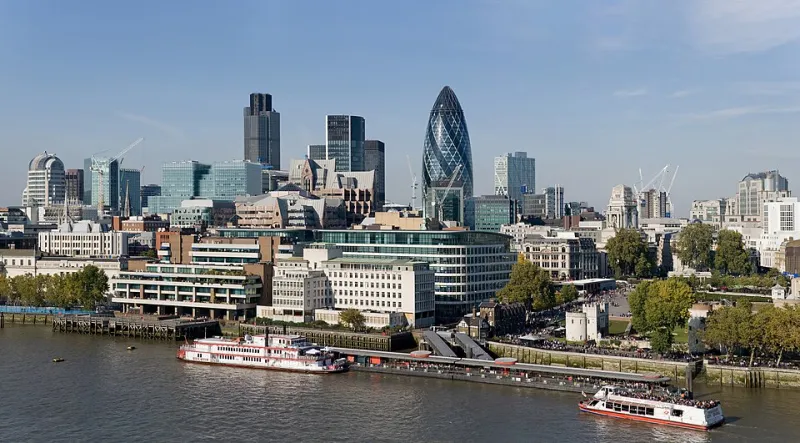
Photo: Thierry Lechanteur, CC BY-SA 4.0, via Wikimedia Commons
Every British city has one: the tower that was announced with fanfare, rendered in golden-hour CGI, and then quietly erased from the planning register. The Manchester scheme that became a car park. The Liverpool tower that survives only in a 2007 press release. The London skyscraper that was 'vital' for fifteen years and then vanished into an application for a shorter, blander successor.
We spend a great deal of energy on this site tracking what rises. We should spend more on what doesn't — because the render graveyard is where a city's real character is exposed.
The Recession Archive
The 1990s were the great cull. Schemes conceived in the late-1980s boom — and there were more of them than commonly remembered, in Leeds and Glasgow as well as the obvious London sites — were shelved as values collapsed and developers discovered that a tower's economics collapse faster than a low-rise's. A tower is a bet on rents a decade out; when the present turns hostile, the future is the first casualty.
The 2008 crash produced a second, larger wave. Some of those proposals eventually returned, diluted: fewer storeys here, a hotel swap there. Others never came back at all. Anyone who has followed London's skyline over the past decade will recognise the pattern of the shrinking supertall — the announcement at 300 metres, the revised scheme at 260, the consented tower at 200, and the quiet substitution of two residential blocks at 90. The render outlives the tower by years.
The Stalled Present
Today's graveyard is different in character. The enemy is no longer only finance; it is viability arithmetic — the alchemy by which affordable housing obligations, building safety costs and infrastructure levies consume a tower's margin — and a planning system that can hold a scheme in consultation for years while the market moves beneath it.
The result is a generation of proposals that are less ambitious than their predecessors but no more likely to be built. Render-only fantasy has become a business model: announce a landmark, generate headlines, anchor land value, and let the application lapse. Local plans across the North are littered with such ghosts, and skyline debates — in Birmingham, in Leeds, in Glasgow — are regularly conducted around towers that exist only as JPEGs.
What Separates the Built From the Drawn
Having watched dozens of schemes rise and dozens more die, the pattern is stubbornly consistent. The towers that get built share three traits: a patient, well-capitalised backer willing to hold land through a cycle; a design that can survive value engineering without losing its reason for being; and — crucially — a first anchor tenant or pre-sale that de-risks the early floors. Fantasy towers, by contrast, are usually designed backwards from a headline height, with the economics sketched in afterwards.
There is a lesson here for how we read announcements. The genuinely significant schemes are rarely the loudest. They are the ones with named contractors, funding lines and, above all, cranes. A planning consent is a permission, not a promise. A render is an opinion. A piling rig is a fact.
Why the Graveyard Deserves Our Attention
It is tempting to treat unbuilt towers as embarrassing clutter. I would argue the opposite. The graveyard is a record of civic ambition — sometimes misplaced, often premature, occasionally ahead of its time. Several of Britain's now-celebrated towers were once mocked as unreachable fantasy; several of the era's dismissed proposals would look right at home in today's skylines.
So by all means track the topping-outs and the crane counts. But keep a file on the ghosts too. Ten years from now, the most interesting skyline story in any British city may not be the tower that got built — it may be the one that didn't, and what its absence says about the decade we just lived through.