Hours Borrowed From the Sun: The Streets Living in the Wake of Britain's Newest Towers
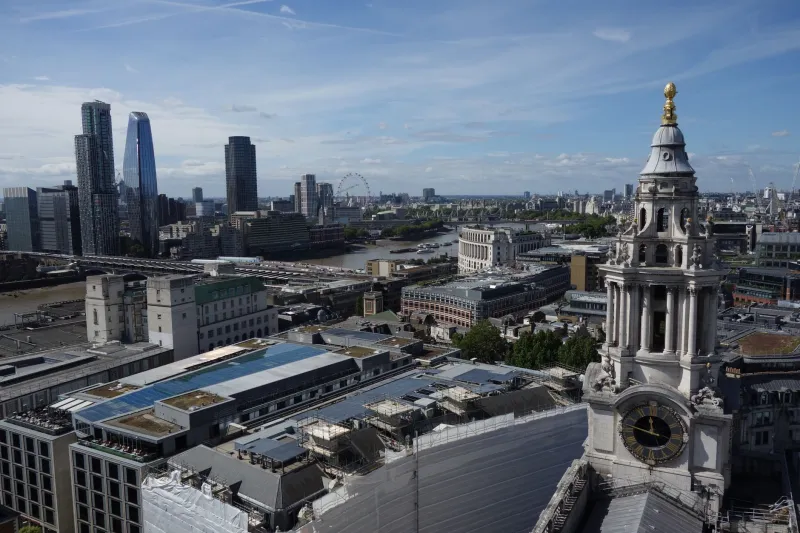
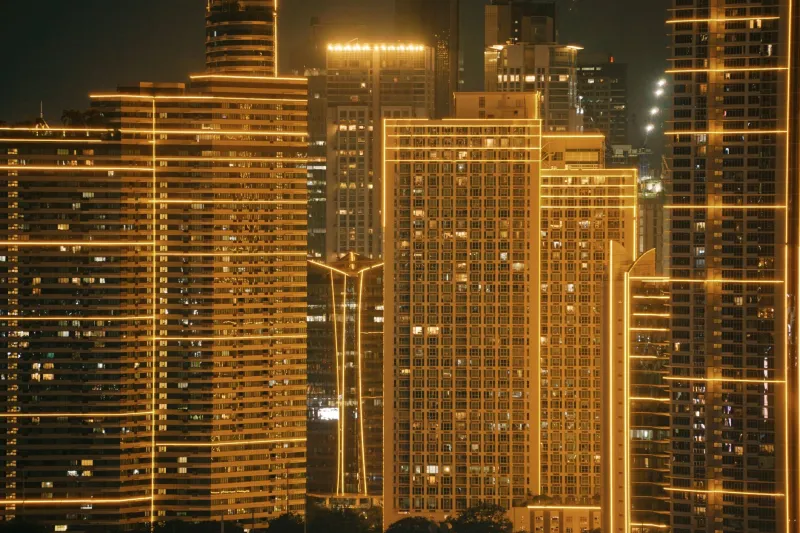
Every topping-out ceremony is photographed from above. Almost none are photographed from behind, from the back gardens that fall into permanent shade the moment the crane leaves site. Yet for every tower that completes in Britain, there is a perimeter of streets whose daylight budget has been quietly, permanently reduced.
Call it the shadow tax: the cumulative hours of direct sunlight surrendered by neighbouring homes to the newest generation of tall buildings. It is paid in full, every year, by households who never consented to the transaction.
Counting the Hours
The methodology is unglamorous but increasingly precise. Sunlight-mapping software used in daylit planning assessments — the kind required under the BRE's Site Layout Planning for Daylight and Sunlight guidance — can be turned around on completed buildings, modelling shadow paths across the solstice extremes and the equinox in between.
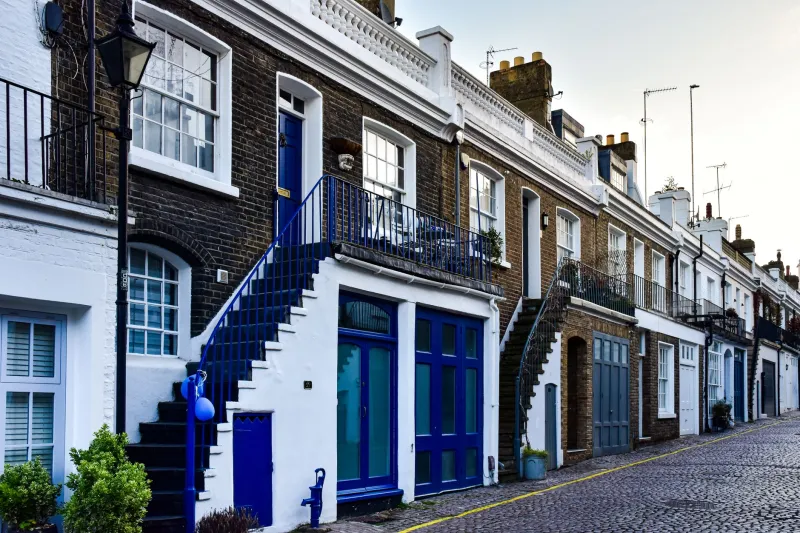
Run those models on recent completions and a pattern emerges. A tower rising above the traditional London terrace scale typically casts a shadow envelope that, in midwinter, stretches across the equivalent of three to five residential streets. What matters is not the peak reach but the dwell time: how long the shadow sits over a given garden as the sun arcs across the sky.
On the southern approaches to some of the newer clusters around the Isle of Dogs, winter direct sunlight to north-facing gardens behind the towers drops to under two hours a day — down from four or five before the current wave of completions. In planning terms, this can be argued as acceptable. In gardening, laundry-drying and mental-wellbeing terms, it is a different ledger entirely.
Leeds: The Back-to-Back Precedent
Leeds offers the most instructive provincial case study, partly because of its building stock. The city's famous back-to-backs and long northern terraces were oriented in an era when a neighbouring structure was never more than a gable end. Drop a twenty-five storey residential block into the South Bank or the area around Whitehall Road and the shadow geometry behaves very differently than it would over a Georgian square.
Residents' groups along the western edge of the South Bank have begun compiling their own shadow diaries — timestamped photographs of gardens taken on the winter solstice, year on year. It is amateur monitoring, but it is exactly the evidence base that daylight assessments rarely capture: the difference between a theoretical sunlight aperture and a hedged six-metre plot that no longer dries out between October and March.
The council's planning officers, for their part, point to the trade-off the city has accepted: 3,000-odd homes within walking distance of the station, in a city that spent decades exporting its young workers to London. The shadow tax, in this framing, is the price of not sprawling.
Manchester: Where the Shadow Falls on the Neighbours' Neighbours
Manchester's tower boom — concentrated in the Deansgate-Pomona corridor and around Great Jackson Street — has produced a shadow problem with an unusual twist. The clusters are dense enough that their shadows compound: one tower's afternoon shadow is intercepted and re-cast by the next, extending the effective envelope well beyond what any single scheme's assessment predicted.
Streets two and three back from the towers, whose own daylight assessments showed no material impact, are finding their light diminished anyway. Cumulative impact is the acknowledged blind spot of the UK planning system: each application is assessed on its own shadow, not the aggregate of a district in flux. Manchester has no formal mechanism for auditing it after the fact.
What Ever Comes Back?
Compensation for lost light is rare to the point of vanishing. Rights to light, the ancient easement, offers a remedy only in narrow cases — and courts have consistently been reluctant to award injunctions against residential schemes of public benefit. Design concessions do occasionally materialise: a stepped massing here, a chamfered corner there, a communal terrace reoriented toward the afternoon sun. But these are negotiated at planning stage, by the scheme's own assessment, and almost never revisited once the shadow is real.
Some continental cities handle this differently. German and Danish authorities increasingly model cumulative daylight at district level and treat sunlight hours on existing homes as a resource with a budget. Britain has no equivalent, and the growing number of residents photographing the same patch of shade every 21st December suggests the gap is becoming politically visible.
The towers, on the whole, are worth having. The failure is in the accounting — a system that counts every new home in minute detail and counts every lost hour of sunlight in no detail at all. Until district-scale shadow audits become routine, the streets behind the cranes will keep paying a tax nobody ever itemised.