Forty Storeys Up, Whose Garden Is It Anyway? Auditing Britain's Sky-Level Landscaping Promises
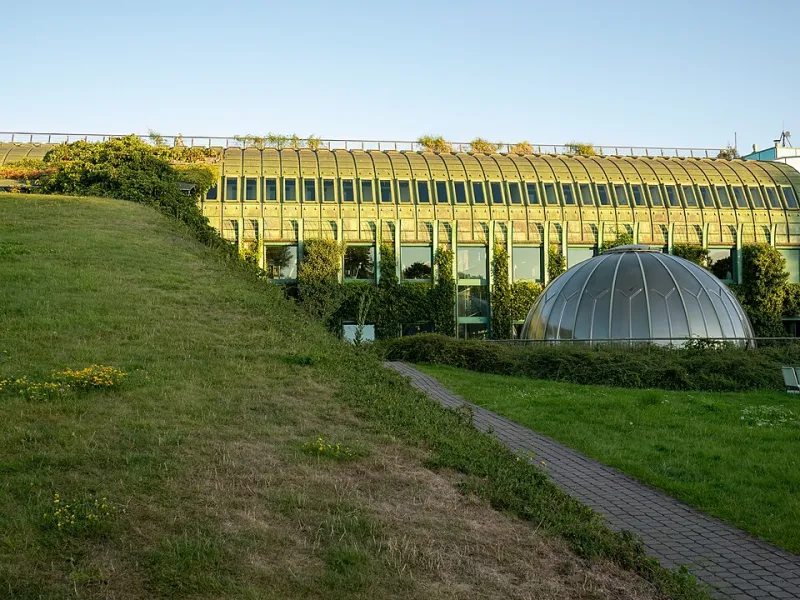
Photo: Rhododendrites, CC BY-SA 4.0, via Wikimedia Commons
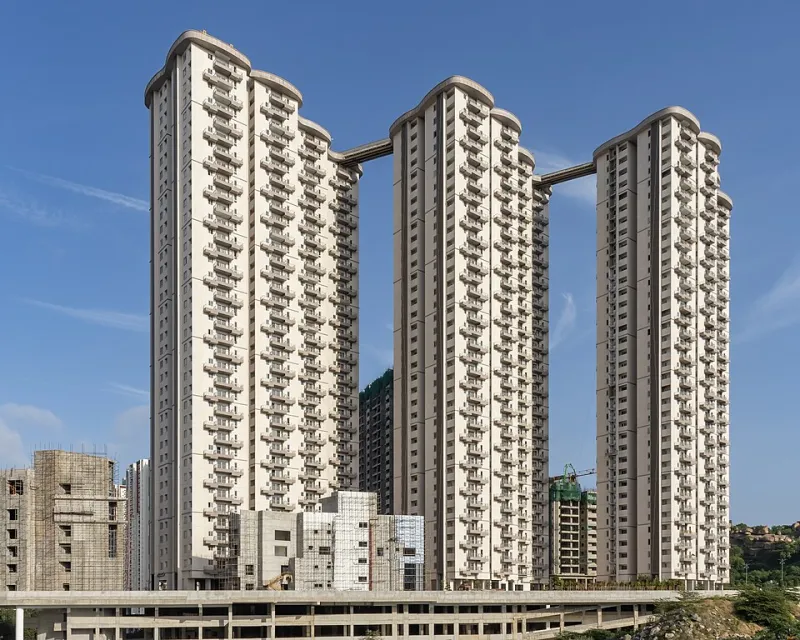
Every tower proposal of consequence now arrives at planning committee with a sky garden attached. Rendered in saturated greens, populated by effortless residents clutching flat whites, these elevated terraces have become the civic sweetener of choice — the visual promise that a 40-storey block of flats is really a piece of public-spirited infrastructure. But walk the podiums and roof decks of Britain's completed towers and a more complicated picture emerges: some of these gardens are thriving, genuinely used communal spaces; others are windswept tokenism, kept alive on a shoestring maintenance contract or quietly closed to the residents they were promised to.
The Planning Ledger
The roots of the phenomenon lie in the planning process. Where a tall building delivers density well beyond what a local plan might ordinarily accept, officers and committees increasingly look for offsetting benefits — and a publicly accessible or resident-accessible garden near the top of the building is an easy line to write into a Section 106 agreement. The difficulty, landscape architects told us, is that nobody at committee stage asks the follow-up question: who pays for this garden in twenty years' time?
"A roof garden at height is not a park," says one London-based landscape practice principal, who has delivered planted terraces on towers in both the capital and Salford. "Everything costs more — soil has to be engineered to a weight budget, irrigation has to be mains-fed and fail-safe, and every plant has to survive exposure that would finish off the same species at street level. If the service charge hasn't been modelled honestly at the outset, the garden dies by year five."
Maintenance figures bear this out. Facilities managers we contacted across three cities described annual costs per square metre for high-level planted space running at several multiples of ground-level landscaping, driven by specialist access, irrigation repairs, and the constant replacement of plants that the wind simply scours out. Where a tower has a single freeholder or a well-funded management company — the model on several of the better-regarded schemes at Nine Elms and in Manchester's Deansgate cluster — the gardens are trimmed, replanted and genuinely occupied. Where ownership has fragmented into leasehold units and an under-resourced residents' management company, the picture is often bleaker.
What Residents Actually Find
Residents' groups are blunt about the gap between brochure and balcony-level reality. On one completed tower in the Isle of Dogs, the "sky garden" promised in the marketing suite amounts to a shared terrace with a row of planters and a handful of chairs, accessible by a lift that requires a fob — and, residents say, frequently out of service. Elsewhere, gardens marketed as publicly accessible have been quietly reclassified as residents-only, or closed entirely on grounds of insurance and fire safety, a sensitivity that has only grown since Grenfell placed the safety regime of high-rise communal space under permanent scrutiny.
Yet it would be wrong to paint the whole sector as render-fuelled deception. Some of Britain's elevated gardens are exemplary. The public sky garden at 20 Fenchurch remains the most visited example, booking system and all, while newer residential schemes in Croydon and Stratford have delivered planted podiums and terraces that residents' associations describe as the social heart of the building. The common thread, according to everyone we spoke to, is governance: a clear, funded maintenance obligation, written into the tenancy of the building itself rather than left to goodwill.
Deliverable or Decorative?
The question facing planners is whether green space at height should be treated as genuine public benefit or as decoration to be discounted when weighing a scheme's merits. Some authorities are already tightening up: requiring management plans as a condition of consent, specifying minimum planting standards, and insisting on evidence of long-term funding before the garden counts towards the planning balance.
The lesson from the past decade of tower building is that a sky garden is not an amenity that arrives with the completion certificate. It is a living system with a permanent operating cost, and it succeeds or fails on the unglamorous paperwork — the service charge schedules, the irrigation warranties, the replacement planting cycles — that no marketing render ever shows. Britain's towers will keep growing gardens in the sky. Whether anything worth walking through actually grows there will be decided long before the first planter is craned into position.