Weather at Altitude: The Honest Vistas of Britain's Occupied Towers
Photo: Wassily Kandinsky, Public domain, via Wikimedia Commons
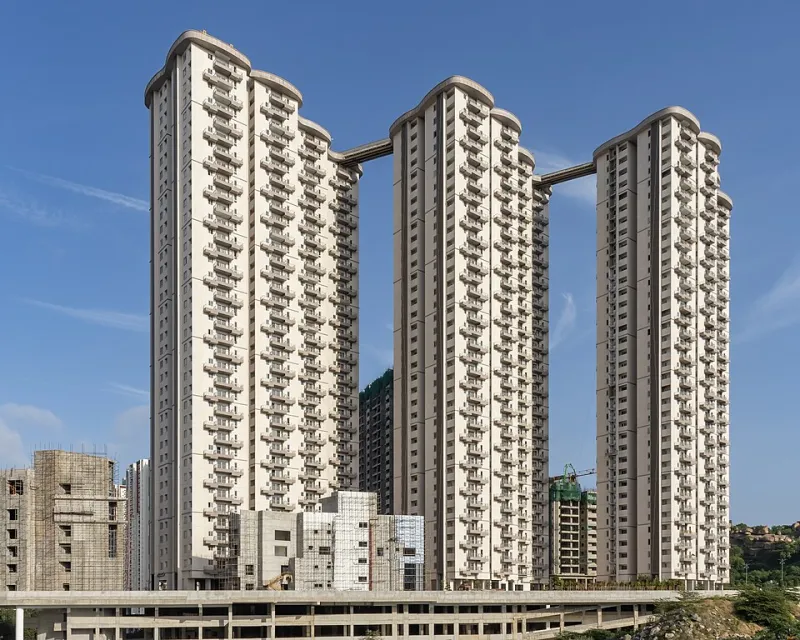
Every residential tower launched in Britain over the past decade has been sold twice: once in floorplans, and once in renders. The second sale is the more expensive one. In the computer-generated images, the horizon stretches unbroken to the Chilterns, the Pennines or the estuary, depending on the city, and the sky is invariably a colour that British meteorology struggles to produce more than forty days a year.
What happens when the windows are finally installed, the residents move in and the British weather resumes its usual schedule? Skyscraper News spoke to occupants across several completed schemes to find out what the view from an occupied floor actually looks like — and whether the promised panorama survives contact with reality.
The Crane Cabin Years
The first lesson of high-rise occupancy is that the view is rarely finished when you are. Residents of a Salford Quays tower, in occupation since 2019, spent their first three years looking directly into the cab of a tower crane belonging to the scheme opposite. "We named him Gerald," one resident admits. "He'd swing past the window at half past five every morning. You develop a relationship with these things."
This is not an anomaly. Britain's tower clusters — MediaCity, Nine Elms, the Blackfriars corridor, the northern edge of Manchester city centre — are being delivered in phases, which means early residents of any given tower are almost guaranteed a construction horizon. The marketing renders, of course, never show this. They show the skyline of 2035, viewed from a building whose windows were cleaned in perpetuity by imaginary hands.
Drizzle at 100 Metres
The second lesson is meteorological. Above roughly the fifteenth floor, Britain's weather stops being something you watch and becomes something you live inside. Cloud, not fog, is the correct word — residents of the taller Isle of Dogs towers report days when the windows look onto nothing at all, a blank grey pane-to-pane whiteness that makes floor 38 indistinguishable from a hotel corridor with the lights off.
Sunset, when it comes, is the compensation. At altitude, the light show is genuinely better than at street level: the cloud decks light up in layers, and rain can be watched approaching across the city like a slow-moving blind being drawn. Several residents described storm-watching as the single greatest unplanned benefit of vertical living. One Manchester occupant keeps a dedicated chair by the north-facing window for exactly this purpose.
The Neighbour's Rooftop
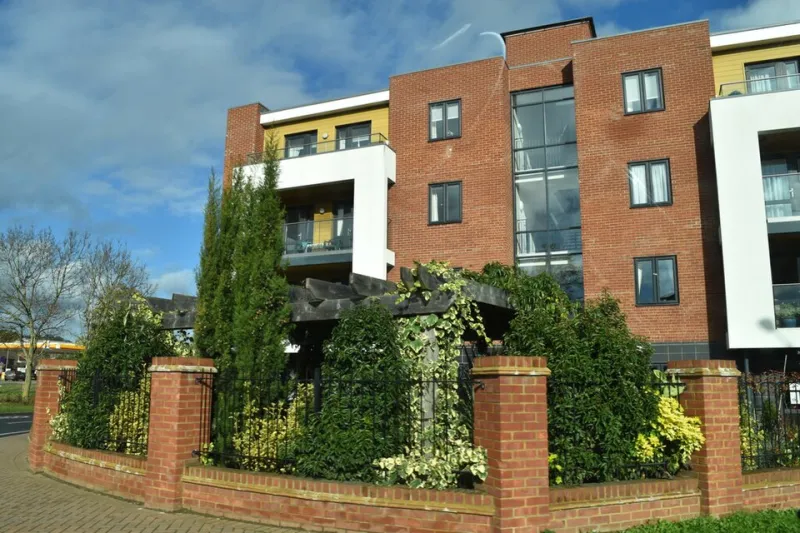
The third lesson is architectural, and it is the one the renders are most guilty of omitting: other buildings. The panoramic vista is, in most British locations, a framed vista — framed by the slab elevations of the towers either side, the plant decks above, and the car parks below.
In Croydon, residents of one completed scheme describe their view as "a diptych" — two slivers of distant Surrey Hills visible between the flanks of neighbouring towers. In Leeds, a South Bank resident notes that her promised river view now terminates, five storeys down, in the green roof of the adjacent build-to-rent block. "It's actually rather nice," she says. "Sedum and wildflowers. Better than the render, honestly, which had a heron on it."
There is a genuine planning question buried in all this. Amenity views are not a material planning consideration, and no obligation exists to deliver the vista in the brochure. But as densification continues and towers cluster ever closer, the gap between rendered and realised outlook widens — and it is residents, not buyers of unbuilt apartments, who carry it.
What Residents Actually Photograph
Perhaps the most telling finding from our informal survey: what people at altitude point their phones at. Not the skyline, mostly. The kerbs. The street patterns. The tiny theatre of junctions and delivery vans and pedestrians navigating puddles. From floor 34, the city reads as a living diagram, and it is this — not the distant hills — that residents say they would miss.
One Nine Elms resident put it best: "The render promised me the horizon. What I got was the weather, the cranes, and the best people-watching in London. I'd take that trade again."
The view from floor 34, it turns out, is not the one in the brochure. It is more honest, more changeable and, on the right evening, considerably better.