Lobby Intelligence: Why the Concierge Desk Is Britain's Truest Post-Occupancy Report
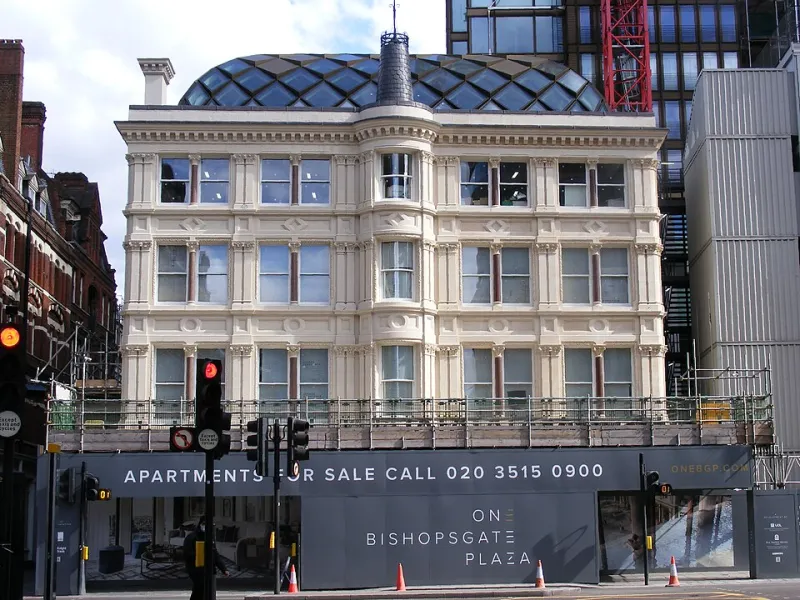
Photo: sludgegulper, CC BY-SA 2.0, via Wikimedia Commons
Every tall residential building in Britain comes with two versions of itself. The first appears in planning submissions and marketing brochures: the rendered sky garden, the seamless lift lobby, the co-working lounge bathed in southern light. The second version exists only in the shift logbook kept at the concierge desk — and it is considerably less flattering.
For this piece, we spoke with concierges, facilities managers and maintenance crews across a dozen residential towers, from Salford Quays to the Isle of Dogs. What emerged is a body of knowledge that the industry almost never captures: a running, unsentimental evaluation of how these buildings actually perform, delivered by the people who know them floor by floor.
The Logbook as Evidence
Consider the humble incident report. One facilities manager in a 32-storey Salford tower showed us three years of entries for a single communal terrace: repeated complaints about wind tunnel effects, a barbecue area used four times in its first summer and abandoned thereafter, planters replaced twice after exposure killed the first planting scheme. None of this appears in the developer's post-completion publicity. All of it appears in the logbook.
Post-occupancy evaluation, as practiced formally, is a sparse and often conflicted discipline in UK residential development. Surveys go out once, responses are low, and the findings rarely trouble the next commission. The concierge, by contrast, conducts a continuous, involuntary survey — every complaint, every broken door closer, every resident who asks why the 'amenity space' on level nine has never been opened.
Where Design Meets the Weather
The most common theme in our conversations was the gap between the architect's section drawing and the prevailing south-westerly. Entrances with impressive double-height glazing act as pressure chambers on gusty days; a concierge at a Canary Wharf tower described 'wrestling the same door forty times a shift' until a retrofit canopy was finally installed — two years after handover.
Sky lounges present a subtler failure. Several staff noted that communal floors positioned high for the views are, in practice, too far from daily life to be used. 'People want a lobby table and a parcel shelf, not a view they have to book,' one Manchester-based building manager told us. In several towers, the much-marketed residents' lounge has quietly become a storage room, a letting agent's office, or simply a locked door with a very clean carpet.
The Knowledge Nobody Buys
What frustrates the people we spoke to is not the failures themselves — every complex building has them — but the fact that their knowledge evaporates at the point it could be most useful. 'We know which riser floods, which flat layout nobody renews, which lift breaks down in cold snaps,' said one veteran of two London towers. 'Nobody has ever asked us before designing the next one.'
There are exceptions. A handful of build-to-rent operators now run structured feedback loops with front-of-house staff, and the results are visibly influencing later phases: wider parcel rooms, sheltered entrances, amenity floors moved down to where residents actually pass them.
An Argument for the Second Version
The case is simple. Britain is adding tens of thousands of tall homes a year, and each tower is a full-scale experiment in vertical living whose results are recorded nowhere systematically. The concierge desk is, in effect, the cheapest research department in the industry — staffed continuously, incentivised by nothing, and already keeping the notes.
If developers, architects and councils want taller buildings that work, the starting point is not another render. It is a conversation at the desk, with the logbook open, before the next tower's plans are drawn. The people who hold the keys hold the evidence too.