The Small Hours Above the Hoardings: A Night With the Crews Who Raise Britain's Towers
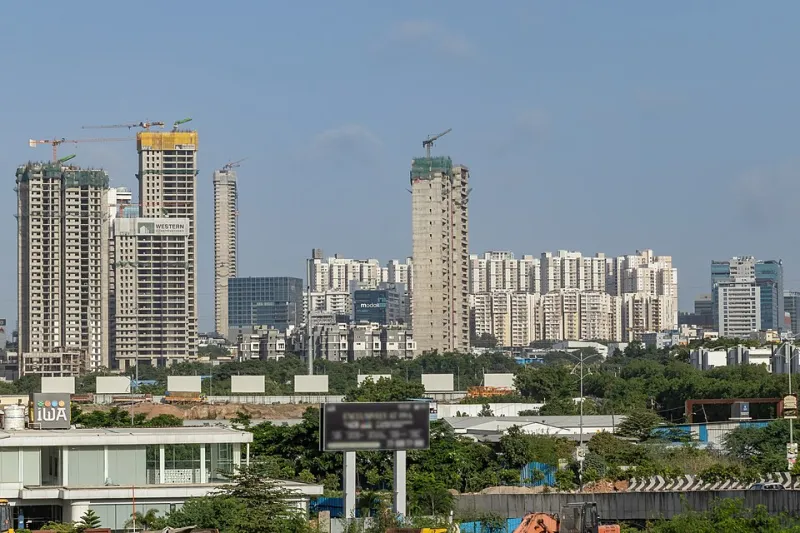
Photo: iMahesh, CC BY-SA 4.0, via Wikimedia Commons
When the Concrete Has to Wait for the Traffic
The rule that governs most night working on a British high-rise site is not written on any drawing. It is written in the conditions of consent: no deliveries through the morning peak, no concrete lorries queuing on a red route, no pours during the hours when the neighbours might reasonably object. The result is a construction programme that bends itself around the city rather than the other way round.
On a residential tower rising through the twenties of its floors somewhere between the Mancunian Way and the Irwell, the overnight shift begins where most people's ends. The first wagons arrive at ten in the evening, marshalled by a banksman whose hi-vis has long since lost its brightness. The concrete pour — a single floor plate, roughly 700 cubic metres — has been scheduled to finish before the morning curfew on lorry movements. If it slips, the lorries idle, the mix stiffens, and a day's work risks becoming a structural cold joint that the design team will have to argue about for weeks.
This is the arithmetic that nobody sees from street level. The skyline rises in daylight photographs; it is actually built in the gaps the city leaves open.
Bolted to the Façade at Three in the Morning
Not every night task is a pour. Some of the most exposed work happens on the perimeter, where the climbing platforms that carry the façade trades inch up the tower between floors. The electricians and installers bolted to these systems work in a different country from the one below: wind noise, sodium light spilling from the deck above, and the peculiar intimacy of a two-man platform suspended forty storeys over a dual carriageway.
One electrician we spoke to described the rhythm plainly. "You get the structure to yourselves. No plant moving, no one shouting over you. It's the safest the site ever feels and the most exposed you ever feel, both at once."
That paradox sits at the heart of night working on tall buildings. Fewer people means fewer collisions and less congestion on the decks. It also means fewer eyes, thinner supervision on some trades, and a fatigue profile that safety managers spend their careers trying to model. The best sites treat night work as a discipline of its own: rotated shifts, lighting plans audited as seriously as scaffolding inspections, and welfare provision that acknowledges a worker eating a hot meal at four in the morning has already worked most of their body clock's objections.
The Invisible Workforce
There is a demographic reality to all this that the industry rarely advertises. Night shifts on high-rise sites are disproportionately staffed by workers who have come to the UK for the trade — from Poland, Romania, Lithuania, the Philippines, Nigeria — and for whom the night premium is not a lifestyle choice but the difference between a viable wage and an unviable one. They are, in a very literal sense, the people who build the skyline while the skyline's future residents sleep.
The planning system, to its credit, has begun to notice. Conditions on major consents in London, Manchester and Birmingham increasingly require the main contractor to report on night working hours, noise monitoring and community liaison. What no condition yet requires — and what perhaps should — is some accounting of the workforce itself: who works the nights, how they are trained, and whether the fatigue and isolation of the small hours are being managed as risks in their own right.
What the Night Shift Buys the Programme
Developers will tell you night working is expensive — premiums, lighting, security, the slower pace of work done under artificial light. So why do it? Because the alternative is slower still. A tower that can pour its plates through the night and dry its screeds without interruption can compress a floor cycle from ten days to seven. Across forty storeys, that is months off the programme, and months are money in a market where forward-funding agreements have completion dates written into them like clauses in a marriage contract.
The night shift, in other words, is not a curiosity of construction culture. It is one of the load-bearing assumptions of the entire high-rise pipeline. Every tower announced with an optimistic completion date quietly depends on hundreds of people working through the hours when the city has stopped watching.
The next time a crane swings over a hoarding at two in the morning, it is worth remembering what is actually happening above it: a floor plate being filled, a façade being bolted on, a programme being kept. Britain's skylines are not built in daylight. They are assembled in the dark, by a workforce the daylight never sees, and delivered to a city that wakes up to find itself a few storeys taller.