Ten Floors of Difference: Decoding the Price Ladder in Britain's Residential Towers

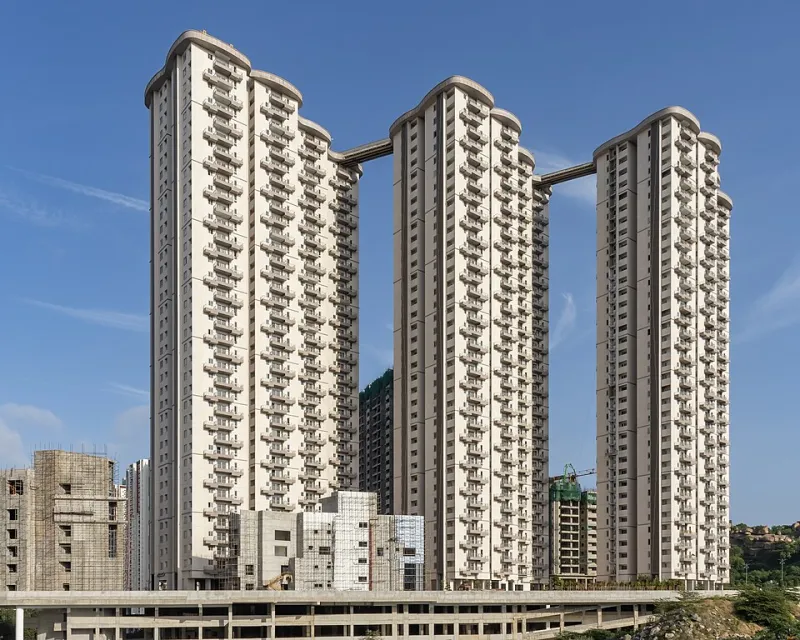
Photo: 大禾花, CC BY-SA 4.0, via Wikimedia Commons
Every marketing brochure for a residential tower tells the same story: the higher, the better. Yet the mechanics of how prices climb a building — floor by floor, metre by metre — remain oddly opaque. Drawing on transaction data, agent guidance and planning documents, we have mapped the vertical price ladder in three of Britain's most active high-rise markets to answer a simple question: what does the top ten floors of a British tower actually cost, and why?
The London Gradient: Steep and Getting Steeper
In the capital, the per-floor premium is well established and remarkably consistent. Analysis of completions at Nine Elms and Canary Wharf suggests buyers pay roughly 1 to 1.5 per cent more per floor in the lower and middle sections of a tower, widening to 2 per cent or beyond above the twentieth storey. On a £900,000 apartment, that can mean £18,000 of price between adjacent floors near the crown.
The drivers are not mysterious. Views over the Thames command a measurable premium, as does the psychological separation from street noise and the perceived prestige of a high floor number. At towers such as Landmark Pinnacle or the DAMAC-designed schemes along the Wharf, the phrase "high floor, river view" in a listing does more work than any adjective about finishes.
But the gradient is not uniform. East-facing units in several Docklands towers show a flatter curve than their western counterparts, because the evening light that draws buyers to west-facing glass simply does not exist on the opposite elevation. Height alone does not sell; height plus aspect does.
Manchester: A Compressed Ladder
Greater Manchester's tower boom — from Deansgate Square to the clusters rising around Ancoats and the Great Jackson Street estate — operates on a different economic logic. With average apartment prices well below the capital's, the per-floor premium is smaller in absolute terms but proportionally similar: typically 0.8 to 1.2 per cent per floor.
What is striking is how quickly the curve flattens. In several Manchester towers, agents report that above roughly the twenty-fifth floor the premium effectively plateaus. The Pennine weather plays its part; when cloud sits low for weeks at a stretch, the difference between floor 28 and floor 44 is, for much of the year, theoretical. Developers privately concede that pricing the uppermost floors is as much about anchoring the whole scheme as about capturing genuine willingness to pay.
Birmingham: The Emerging Crown Market
Birmingham's residential towers, concentrated around the city core and the canalside plots south of Paradise, are only now developing a mature vertical price structure. Early evidence suggests top-floor units in schemes such as those near the Bullring extension achieve premiums of 8 to 12 per cent over identical mid-tower stock — a spread likely to widen as the city's skyline matures and buyers grow more discriminating about which towers actually deliver the views their brochures promised.
Value or Virtue Signalling?
The sceptical reading is that upper-floor premiums are largely marketing artefacts — scarcity pricing for the floors developers photograph. The evidence partially supports this. Light, quiet and air quality genuinely do improve with height, and studies of urban microclimates confirm reduced particulate exposure above roughly the twentieth storey on busy corridors. Those are real benefits with real, if unquantified, value.
Yet the diminishing returns are equally real. Beyond a certain altitude, additional floors deliver marginal gains at rising cost, and the practical penalties — lift dependency, wind exposure on balconies, maintenance access for glazing — are rarely reflected in the price. Buyers paying the crown premium are, in part, purchasing a floor number.
For watchers of Britain's evolving skyline, the lesson is straightforward: the price ladder is a genuine market phenomenon, but its top rungs are priced as much by narrative as by utility. Track the transactions, not the renders.