Wrapped and Waiting: The Long Undress of Britain's Half-Finished Towers
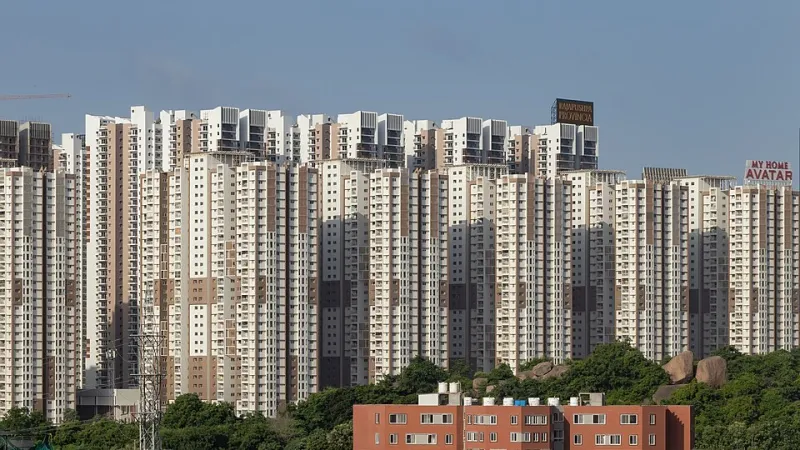
Photo: iMahesh, CC BY-SA 4.0, via Wikimedia Commons
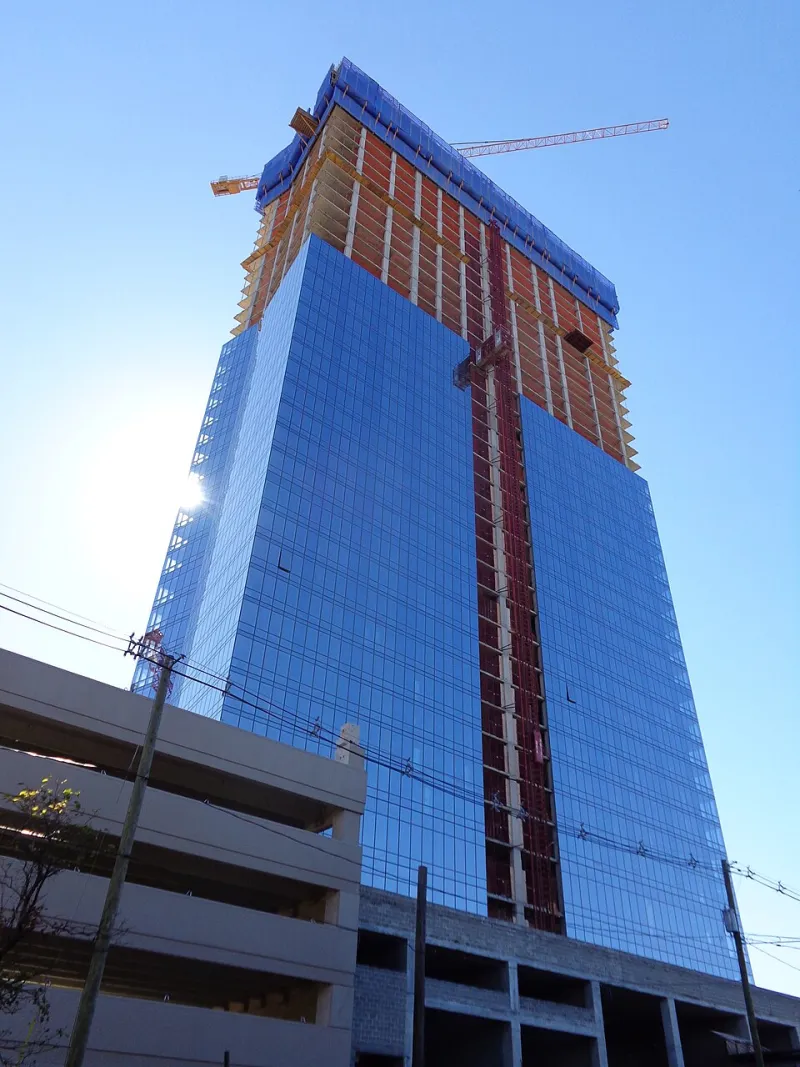
Every city in Britain now has at least one. A tower that has long since claimed its place on the skyline, its structural frame complete and its crane long gone, yet which remains cocooned in scaffolding, debris netting and white plastic sheeting — sometimes for years. From Manchester's Deansgate Square periphery to the edges of Canary Wharf and the back streets of Salford and Leeds, these half-dressed structures have become a familiar, if poorly understood, feature of urban Britain.
The topping out ceremony, complete with the traditional final bucket of concrete and a sprinkling of dignitaries, gets the photographs. What follows rarely does: the protracted, complicated and frequently stalled process of actually finishing a building.
The Gap Between Frame and Façade
Structurally, a residential tower can be watertight within months of topping out. The core is complete, the floors are poured, and the crane is dismantled. But the external envelope — the rainscreen panels, curtain walling, insulation and cladding that give a tower its character and its thermal performance — is a different proposition entirely.
Façade packages sit at the end of some of the longest and most fragile supply chains in construction. Specialist rainscreen systems, many manufactured in Europe or further afield, are frequently ordered months in advance and paid for in stages. When a developer hits financing difficulties, or when building safety approvals slow the programme, the façade contractor is often the first to demobilise. The frame stands; the skin does not.
The result is a tower in suspended animation: protected by temporary sheeting, its hoist still clinging to one elevation, its neighbours in a permanent state of speculation about whether it will ever be finished.
The Remediation Shadow
There is a second, more sombre reason why so many British towers now spend years wrapped in scaffolding: cladding remediation. Since the Grenfell Tower fire, the regime of surveys, assessments and mandatory replacements of unsafe external wall systems has placed thousands of buildings into what the industry calls remediation — a process that can take three, five, even seven years from initial survey to final sign-off.
For occupied buildings, this produces a peculiar urban condition. Residents of towers in Salford Quays, Leeds' South Bank and across London's outer boroughs have lived for years behind scaffolding and netting, their views reduced to a lattice of steel poles, their balconies inaccessible, their service charges swollen by waking watch costs and interim safety measures. The building is, in every functional sense, finished and occupied — yet it presents to the city as a construction site.
The Building Safety Act has accelerated funding for the worst cases, and the pace of remediation has improved. But the pipeline remains long, and the visual effect — a skyline dotted with shrouded towers — has become one of the defining sights of Britain's post-Grenfell built environment.
Who Pays While the Building Waits?
The economics of the half-dressed tower are rarely examined. For an unoccupied, stalled scheme, every month of delay accrues costs: security, temporary weather protection, lender interest, and the slow depreciation of interiors fitted out but never occupied. Several high-profile schemes in the North West have sat in exactly this position after main contractors entered administration, leaving façade packages uncompleted and funders reluctant to release further tranches.
For local authorities, the half-dressed tower presents a planning dilemma. Enforcement powers over unsightly sites are limited, and a wrapped tower is, technically, a tower under construction. Councils can cajole, but they cannot easily compel completion.
What the Limbo Means for the Skyline
There is a temptation to read the half-dressed tower as failure. Often it is something more nuanced: a snapshot of the gap between structural ambition and finishing capital, or the necessary inconvenience of making buildings safe. Some of these towers will emerge within months, their final façades transforming streets that have lived with hoardings for half a decade. Others will take longer, and a few will not emerge at all.
For skyline watchers, the lesson is to look past the sheeting. A tower's true story is told not at topping out but in the years of undress that follow — and Britain, at present, has more of those stories than at any point in its high-rise history.