Beyond the Bullring: Birmingham's Tower Boom Enters Its Defining Decade
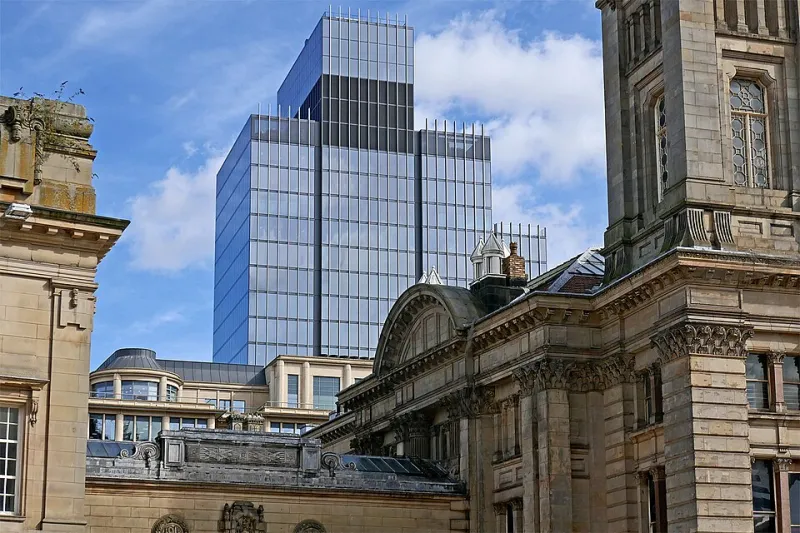
Photo: Roger D Kidd , CC BY-SA 2.0, via Wikimedia Commons
For most of the twentieth century, Birmingham's skyline was defined by what it lacked. Post-war reconstruction produced a city of ring roads and concrete decks, and for decades the tallest structure of note was a telecommunications tower that never opened its restaurant. That era is now well and truly over. The Second City is in the middle of the most sustained high-rise construction boom in its history, and unlike previous waves, this one is visible on the ground — floor by floor, crane by crane.
The Jewellery Quarter Effect
The most striking concentration of activity sits on the western edge of the city centre, where the Jewellery Quarter's Victorian streetscapes are being flanked by a new generation of residential towers. Schemes such as the buildings rising near St George's Wharf and the cluster around the former Birmingham City University site have transformed the area's planning conversations almost overnight. Where heritage campaigners once fought to protect low-rise workshops and surviving brick facades, the debate has shifted to how tall is too tall, and where the buffer zones should fall.
Developers have been drawn by a combination of factors: the extension of the Metro line, the relative affordability of land compared with Manchester and Leeds, and a rental market that remains undersupplied despite years of build-to-rent announcements. The result is a pipeline that, on paper, would push several buildings past the 30-storey mark — heights that would have been unthinkable in Brum a decade ago.
The Aston Cluster Takes Shape
To the north, a second cluster is emerging around Aston University and the Eastside district. The university's own expansion, alongside purpose-built student accommodation schemes and the long-gestating regeneration around Curzon Street, is stitching together a skyline quarter that barely existed when HS2's Birmingham terminus was confirmed. The arrival of the high-speed rail site has acted as a gravitational anchor: every planning application within half a mile now cites it in its design and access statement.
What distinguishes the Aston cluster is its mixed typology. Alongside the towers, mid-rise blocks are being delivered at a pace that suggests developers have learned from Manchester's mistakes — namely, a cityscape dominated by a single residential product at a single price point. Whether that balance survives the next funding cycle is another matter.
Paper Towers and the Consent Gap
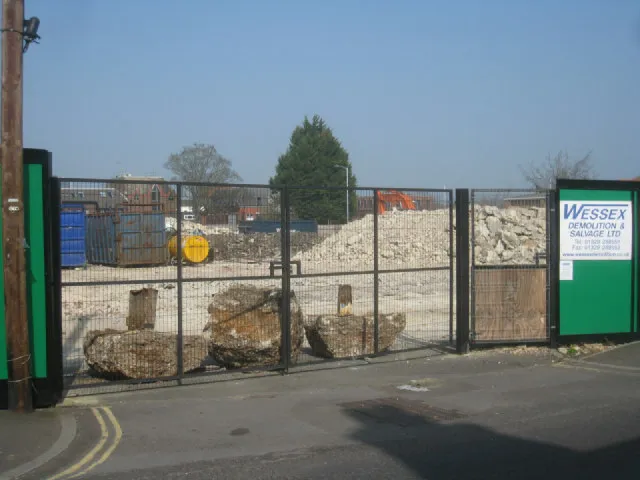
A careful audit of Birmingham's pipeline reveals a familiar pattern for anyone who tracks these things: the gap between consented and commenced schemes is wide, and in places widening. Several headline towers granted permission in the 2018–2021 window remain fenced hoardings with no piling rig in sight. Rising build costs, cautious institutional lenders and the retreat of some overseas investors have all conspired to slow the translation of planning gains into physical floors.
The towers that are genuinely climbing — and there are a good number of them — tend to share common traits: committed funding, often with a registered provider or university attached, and pragmatic designs that were value-engineered early rather than late. Those schemes that treated their planning consent as a sales document have, in many cases, stalled.
A Skyline of Its Own, or an Echo?
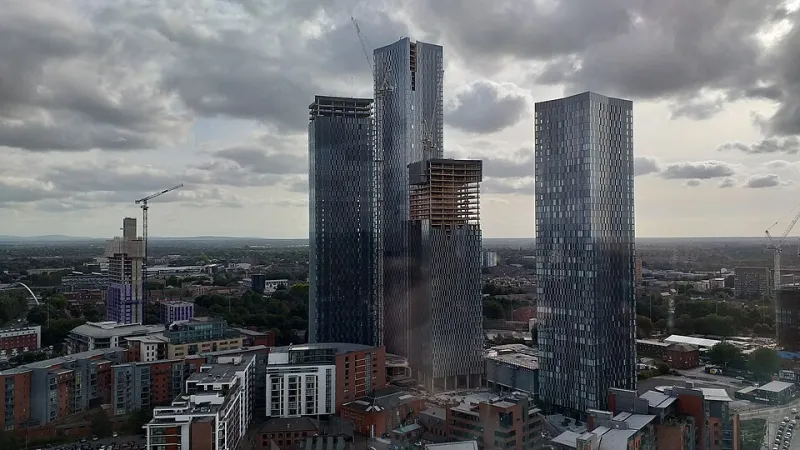
The uncomfortable question hanging over Birmingham's boom is whether the city is building a skyline or borrowing one. Manchester's tower explosion gave the city a coherent, if occasionally monotonous, vertical identity. Birmingham risks importing the same render-ready aesthetic — glazed balconies, contrasting cladding bands, a hotel podium at the base — without the topographic or industrial context that made Manchester's version legible.
There are counter-examples. Schemes that engage with the city's Jewellery Quarter grain, or that respond to the canal network with genuine material quality, suggest a local design culture is emerging. Birmingham's planners, for their part, have begun to push back on generic massing through design review, with mixed results.
The next five years will decide the matter. If the consented schemes that are currently dormant come forward as designed, Birmingham will possess, for the first time since the Victorian era, a skyline that announces itself from the M6. If the pipeline thins, the city will be left with a handful of towers and a folder of expired permissions. Either way, the Second City's vertical decade is now firmly underway — and it deserves closer attention than it usually receives from commentators who stopped looking after 2010.