Ten Towers to Track: A Floor-by-Floor Watchlist for the Year Ahead
Photo: Sandy B , CC BY-SA 2.0, via Wikimedia Commons
There is a particular pleasure in watching a tower rise: the groundworks disappear, the core begins its patient climb, and then, almost suddenly, floor plates appear at a rate that embarrasses everything else on the street. For those of us who keep spreadsheets on such things, here are ten schemes worth monitoring over the coming months — each currently under construction, each with a story attached.
1. The Mercian, Birmingham
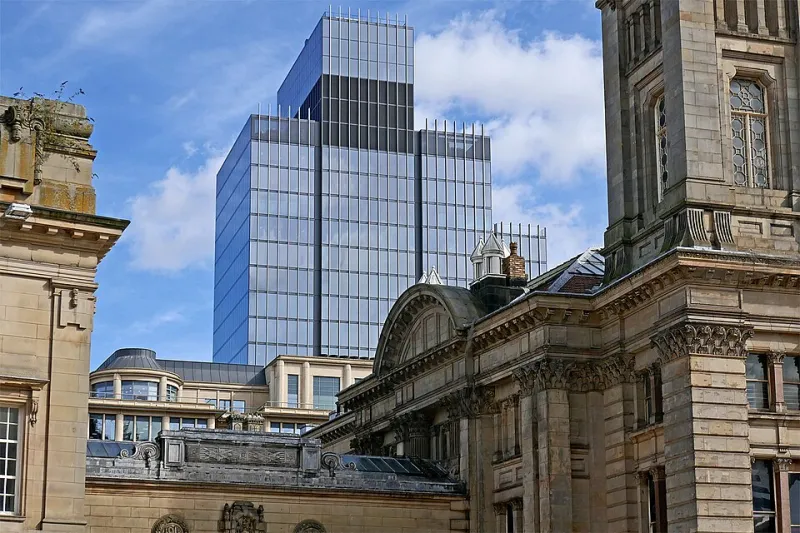
At 42 storeys, the Mercian remains the benchmark for the city's boom, and its distinctive bronze-framed facade has aged well since completion. Include it on your route as the yardstick against which every new Birmingham scheme will be judged.
2. Aire Park Tower, Leeds
Leeds' South Bank continues its transformation, and the residential tower rising as part of the Aire Park masterplan is the one to watch. Now topping out in the high twenties, it is expected to complete next year. Its stepped massing — a concession to daylight objections from neighbouring residents — gives the southern elevation a more sculptural profile than the original consent.
3. Glasgow's Student High-Rise
Glasgow has been quietly assembling a collection of tall buildings along the Broomielaw and in the merchant city fringes. The current leader on site is a purpose-built student accommodation tower now past its twentieth floor, with completion targeted for the following academic year. Its slender profile is a deliberate response to the city's conservation objections — the Glasgow skyline debate remains one of the more spirited in Britain.
4. Manchester's Deansgate Supertall Successor
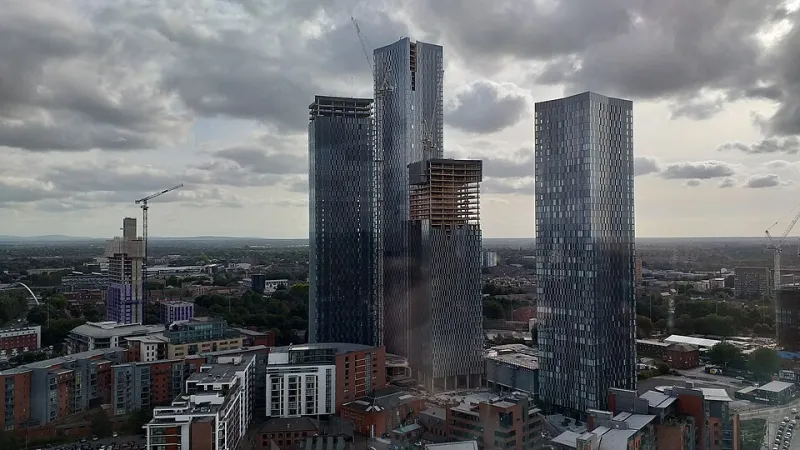
Following the completion of the Deansgate Square trio, attention has shifted to the next generation of Manchester towers. One scheme now rising on the southern edge of the city centre has passed thirty floors and is on course to challenge the city's height record. Watch for the crown element — it has been revised twice, and the latest version is considerably more restrained than the original render.
5. Salford's Quays Cluster
Across the water, Salford Quays continues to densify. A twin-tower residential scheme is progressing steadily, with the western tower now clearly visible from the M602. Completion of phase one is expected within eighteen months, with objections from neighbouring moorings long since resolved.
6. Liverpool's Waterside Return
Liverpool's high-rise pipeline has had a turbulent few years, with several high-profile collapses and rescues. The scheme now climbing on the waterfront edge is therefore something of a relief: a residential tower past its tenth floor, backed by a restructured funding package. Its completion will say a great deal about the city's post-turmoil confidence.
7. Sheffield's Vertical Student Quarter
Sheffield's student accommodation towers rarely make national headlines, but the scheme currently rising near the city's retail core is architecturally the most interesting of the bunch — a terracotta-toned stack that references the city's brick tradition rather than fighting it. It has already topped out at its full height; fit-out continues ahead of next year's intake.
8. London's Docklands Infill
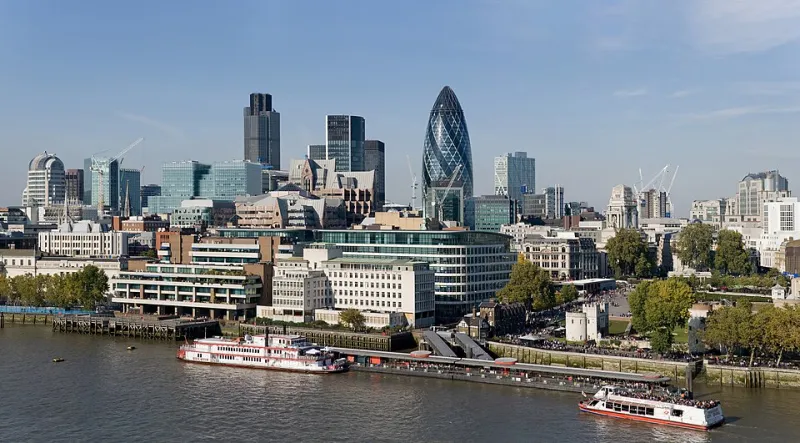
London's tall-building pipeline may have thinned, but construction continues in the Docklands. A residential tower in the high twenties of floors is climbing steadily, notable for its double-skin facade — an unusual and welcome specification at this price point, and one worth studying for anyone tracking energy-performance trends.
9. Cardiff's Capital Tower Successor
Wales' capital has been slow to embrace height, but the current scheme rising near the central station quarter is changing the conversation. At around twenty floors, it is modest by northern standards yet transformative for Cardiff, and its completion next year should unlock the wider masterplan.
10. Bristol's Castle Park Fringe
Bristol's relationship with tall buildings is famously fraught, which makes the residential tower now under construction near Castle Park all the more significant. Rising through its teens of floors after years of planning battles and two design revisions, it represents the first tall building to break the city's low-rise consensus in a generation.
The Common Thread
What unites these ten is not their height — few will trouble the national top ten — but their ordinariness. They are the workaday towers that will actually define Britain's urban skylines this decade, long after the render-only supertalls have quietly lapsed. Count the floors, watch the cranes, and keep your own list. That is, after all, what we are here for.